


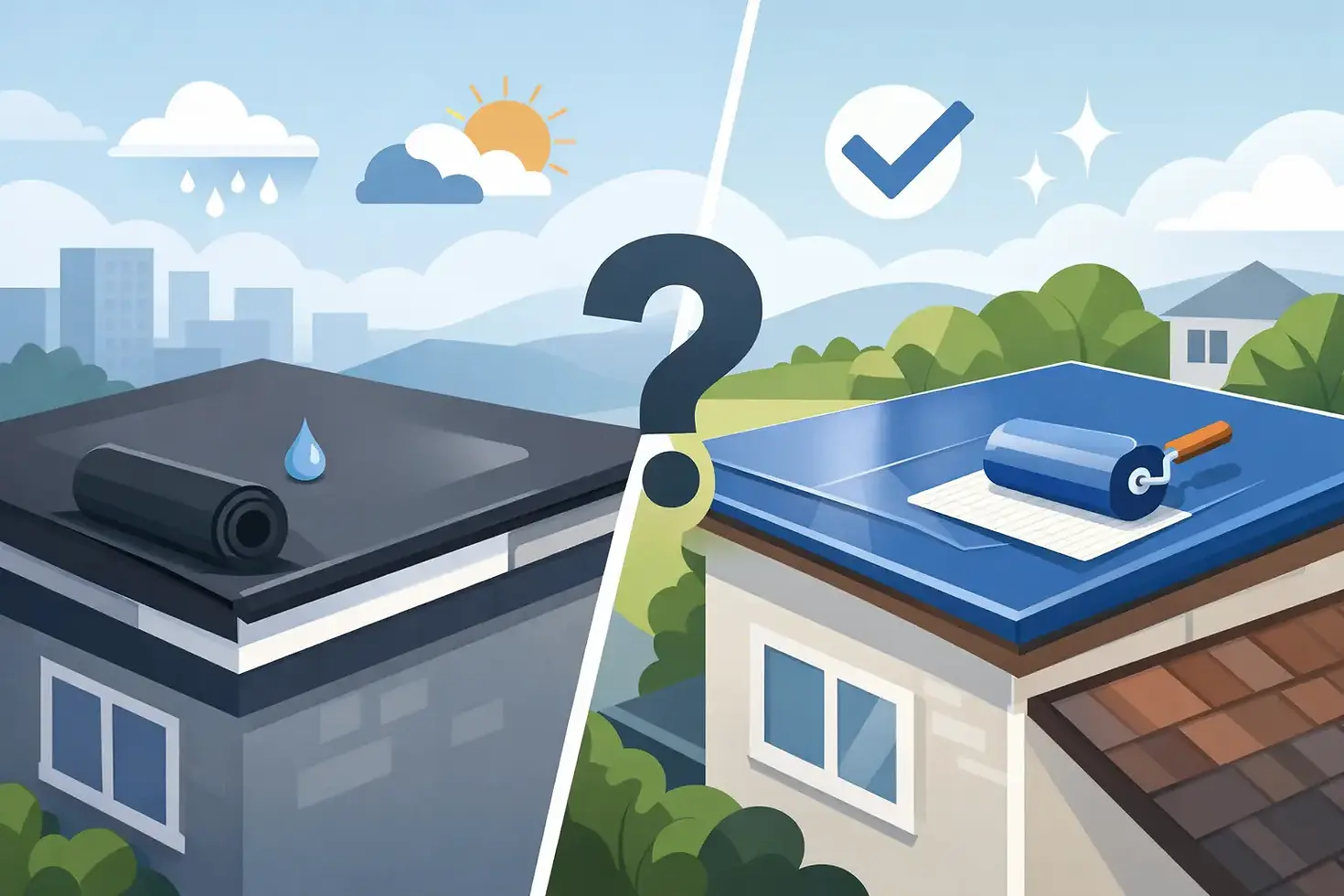
EPDM or Fibreglass Roofing: Which Fits Best?
A flat roof often looks simple from the ground, but the choice of covering can make a real difference to how well it performs over time. If you are weighing up EPDM or fibreglass roofing, the right answer usually comes down to how your roof is used, how much detail it has, and what matters most to you - price, appearance, repairability or long-term durability.
For homeowners and landlords, this is not just a technical decision. A flat roof protects the rooms below, affects future maintenance costs, and can influence how confident you feel every time heavy rain hits Manchester and the wider North West. That is why it helps to look beyond sales claims and focus on where each system genuinely performs well.
EPDM or fibreglass roofing - the basic difference
EPDM is a synthetic rubber membrane supplied in large sheets. It is flexible, weather-resistant and widely used on flat roofs, garages, dormers and extensions. Because it comes in sheet form, it can often be laid with fewer joints than some other systems, which is one reason many property owners see it as a practical, dependable option.
Fibreglass roofing, often referred to as GRP, is a resin-based system reinforced with glass fibre. Once installed and cured, it forms a hard, seamless surface with a clean finish. It is particularly popular where appearance matters, or where the roof has trims, edges and details that benefit from a more rigid, shaped finish.
Both systems can provide excellent results when installed properly. That point matters. The material alone does not guarantee a good roof. Workmanship, correct preparation and attention to detailing are what separate a roof that lasts from one that causes repeated call-backs.
How EPDM performs on domestic flat roofs
EPDM has earned its place because it is durable and forgiving. It copes well with movement in the structure, which can be helpful on roofs affected by changing temperatures. In practical terms, that flexibility can reduce the risk of cracking where a more rigid covering might be under greater stress.
It is also relatively quick to install on straightforward roof shapes. A simple garage or extension roof can often suit EPDM very well, especially where there are broad open areas and fewer awkward corners. With fewer seams, there are fewer obvious weak points, provided the detailing around edges, outlets and upstands is carried out correctly.
Another advantage is repairability. If damage occurs, localised repairs are often possible without replacing the entire roof. That can appeal to homeowners who want a sensible long-term maintenance option rather than a system that becomes costly if one area fails.
That said, EPDM is not always the best fit for every project. Its finish is more functional than decorative, so if the roof is overlooked from upper windows, some property owners prefer the neater visual appearance of fibreglass. It also relies heavily on good detailing at perimeters and penetrations. Poor installation around those areas can undermine an otherwise solid material.
Where fibreglass roofing comes into its own
Fibreglass roofing is often chosen for its crisp appearance and hard-wearing finish. On a modern extension, bay roof or dormer, it can look particularly smart. The topcoat can create a cleaner, more refined surface than rubber, which matters when the roof is visible from inside the property or from neighbouring elevations.
GRP also performs well on roofs with more complex shapes. If the roof includes trims, corners, changes in level or built-in features, fibreglass can be formed neatly around them. Once cured, it creates a continuous surface with no visible rolled seams across the main area.
For foot traffic, fibreglass can also be a strong choice, depending on the roof build-up and intended use. If a flat roof needs occasional access for window cleaning, maintenance or similar tasks, that rigid surface can be reassuring. Of course, no flat roof should be treated as a general walking area unless it has been designed for that purpose.
The trade-off is that fibreglass can be less forgiving during installation. Weather conditions matter, and the application process needs to be controlled carefully. If laid badly, issues such as bubbling, uneven finish or weak detailing can appear. Repairs are possible, but they need to be handled properly to maintain performance and appearance.
Cost is important, but it should not be the only factor
Many customers begin with price, and that is understandable. Roofing work is a significant investment. In broad terms, EPDM is often the more budget-friendly option on simpler roofs, while fibreglass may come in higher depending on the roof shape, access and finish required.
However, the cheapest quote is not always the best value. A lower upfront cost can quickly lose its appeal if the roof needs remedial work because corners were cut during installation. Equally, paying extra for fibreglass may be worthwhile if the roof is highly visible and you want a cleaner finish that suits the property.
The better question is not simply which system costs less. It is which one suits the roof best and is being proposed by a contractor who explains the build-up, the detailing and the expected lifespan clearly. That level of transparency usually tells you more than a headline figure on a quote.
EPDM or fibreglass roofing for lifespan and maintenance
Both systems can offer strong service life when fitted by experienced professionals and paired with suitable decking, insulation and drainage design. Neither material should be seen as fit-and-forget forever, but both can provide many years of reliable protection.
EPDM is often valued for low maintenance. It resists weathering well and does not become brittle in the same way as some older flat roofing materials. Routine inspections still matter, especially after storms, but ongoing upkeep is usually straightforward.
Fibreglass is also durable, but because the finish is rigid, it benefits from being installed on a stable substrate with correct allowances for movement and proper edge detailing. If that is done well, it can be a very long-lasting solution. If not, stress points may show up sooner than expected.
Maintenance for either roof should include checking outlets, clearing debris and keeping an eye on flashings and perimeter details. In many cases, the small problems that turn into leaks are not caused by the field of the roof at all, but by neglected edges or blocked drainage.
Which looks better on a home?
Appearance is not everything, but it does matter. A flat roof over an extension, porch or dormer is part of the overall finish of the property.
Fibreglass usually wins on looks. It has a cleaner, sharper appearance and can feel more in keeping with a high-spec extension or renovation. If you are investing heavily in improving your home, that visual edge can be a deciding factor.
EPDM looks simpler and more utilitarian, though that does not mean it looks poor. On many roofs, especially those not seen regularly, it is a sensible and effective choice. The question is whether the roof is mainly there to perform quietly in the background or whether it is part of a visible design feature.
The right choice depends on the roof itself
A straightforward garage or extension roof with minimal detailing may be ideal for EPDM. A more intricate roof with visible edges and a strong emphasis on finish may suit fibreglass better. If the roof shape is awkward, if access is difficult, or if there are concerns about regular movement in the structure, those factors should shape the recommendation.
This is where experienced site assessment matters. A dependable contractor should not push the same system on every property. They should explain why one material is better suited to your roof, your budget and your expectations. That is the kind of advice homeowners tend to trust, because it reflects the reality of the job rather than a one-size-fits-all sales approach.
For many customers across Greater Manchester, the best outcome comes from balancing performance with practicality. A1 Bespoke Ltd takes that approach because roofing decisions need to stand up to real weather, real property conditions and real long-term use.
So, should you choose EPDM or fibreglass roofing?
If you want a cost-effective, durable membrane for a simpler flat roof, EPDM is often a very strong choice. If appearance, crisp detailing and a harder finished surface matter more, fibreglass may be the better investment. Neither is automatically superior in every situation.
The important thing is to choose a system that suits the roof and to have it installed with care. A good flat roof should not leave you second-guessing every spell of bad weather. It should do its job quietly, look right on the property, and give you confidence that the work has been carried out properly from the start.
Comments